
A breath of fresh air: Ventilation and the future of healthy homes
Condensation and Mould in UK Homes: The Evolving Challenge for Social Housing
Condensation and mould have long been a challenge in UK homes, particularly within the social housing sector. As homes have been upgraded to be more energy efficient and airtight, the risk of excess moisture builds – often with serious consequences.
Mould isn’t just unsightly; it poses real risks to both health and property. Moisture in the home is inevitable. When four people live in a three-bedroom home, they can generate over 112 pints of moisture every week through everyday activities like cooking, washing and even breathing.
But without sufficient ventilation, that moisture can lead to persistent condensation, which in turn creates the ideal conditions for mould to thrive. A 2024 study of ventilation in British homes found that 22% of respondents reported damp or mould on walls or surfaces, highlighting the importance of effective ventilation in maintaining healthy homes.
The Socioeconomic Climate
Covid-19 has increased consumer awareness of the impact of poor indoor air quality (IAQ) and the health risks of condensation and mould. Residents are more informed and more likely to challenge poor living conditions – and social landlords must be prepared to respond.
This has heightened the need for robust ventilation solutions that help combat high levels of moisture and improve IAQ.
Every 1°C change in air temperature can alter relative humidity by approximately 5% of its current value at typical indoor temperatures, assuming the moisture content of the air remains constant. With increasing energy costs, maintaining the right indoor balance has become even more complex.
The Regulatory Landscape Has Shifted
The Homes (Fitness for Human Habitation) Act 2018, driven by former Westminster MP Karen Buck, brought significant change by requiring landlords in both the private and social sectors to offer properties free from issues such as leaks, poor heating, damp and mould.
In recent years, there have been major shifts in regulation and public expectation around housing conditions – and rightly so.
The 2022 updates to Approved Document F of the Building Regulations strengthened ventilation requirements, including whole-dwelling ventilation provision and background ventilation requirements in habitable rooms, subject to the type of ventilation system and applicable guidance.
Alongside this, Approved Document L and the Future Homes and Buildings Standards place greater emphasis on energy efficiency, low-carbon heating and effective ventilation. The updated standards for England were published in March 2026, with implementation and transitional arrangements set out in the regulations. These changes reinforce the importance of specifying appropriate, energy-efficient ventilation solutions.
Mechanical ventilation installations must meet the applicable Building Regulations, including relevant requirements for installation, commissioning and notification. Competent Person Schemes can provide a route for self-certifying eligible work, but registration under such a scheme is not mandatory for every ventilation installation. Housing providers should ensure that contractors have the appropriate competence and that the necessary compliance procedures are followed.
Awaab’s Law also places specific duties on social landlords to investigate and address qualifying hazards within defined timescales. These include significant damp and mould hazards and emergency hazards, reinforcing the importance of effective investigation, timely intervention and preventative action.
These changes, combined with the critical Housing Ombudsman report (2021), have triggered a much more proactive approach from the sector – and a realisation that prevention is not just preferable, but essential.
Seven Practical Solutions and Training to Meet Evolving Standards
1. Supporting Competency Across the Sector
Meeting these new standards means developing the skills needed to deliver high-quality installations.
The NICEIC Domestic Ventilation Course provides contractors and installers with the means to meet this requirement.
Typically, this two-day course provides both practical and theoretical training in system installation, commissioning and compliance. It can support installers in demonstrating relevant competence, although eligibility for Competent Person Schemes depends on the scheme’s requirements and the applicable regulations.
2. Continuous Running Centralised & Decentralised Extract Ventilation
A popular choice for bathrooms, kitchens and WCs in recent years has been a shift from intermittent fans to continuous running extract systems.
These can be either whole-house (centralised) or decentralised systems with fans located in individual wet rooms.
When specifying a product, consider:
- Ease of maintenance
- Energy efficiency
- Length of warranty
- Boost and trickle rates
- Built-in data logging capabilities
3. Explore Positive Input Ventilation (PIV) Solutions
For whole-house solutions, Positive Input Ventilation (PIV) can be an effective option – especially in suitable properties where major renovation isn’t viable.
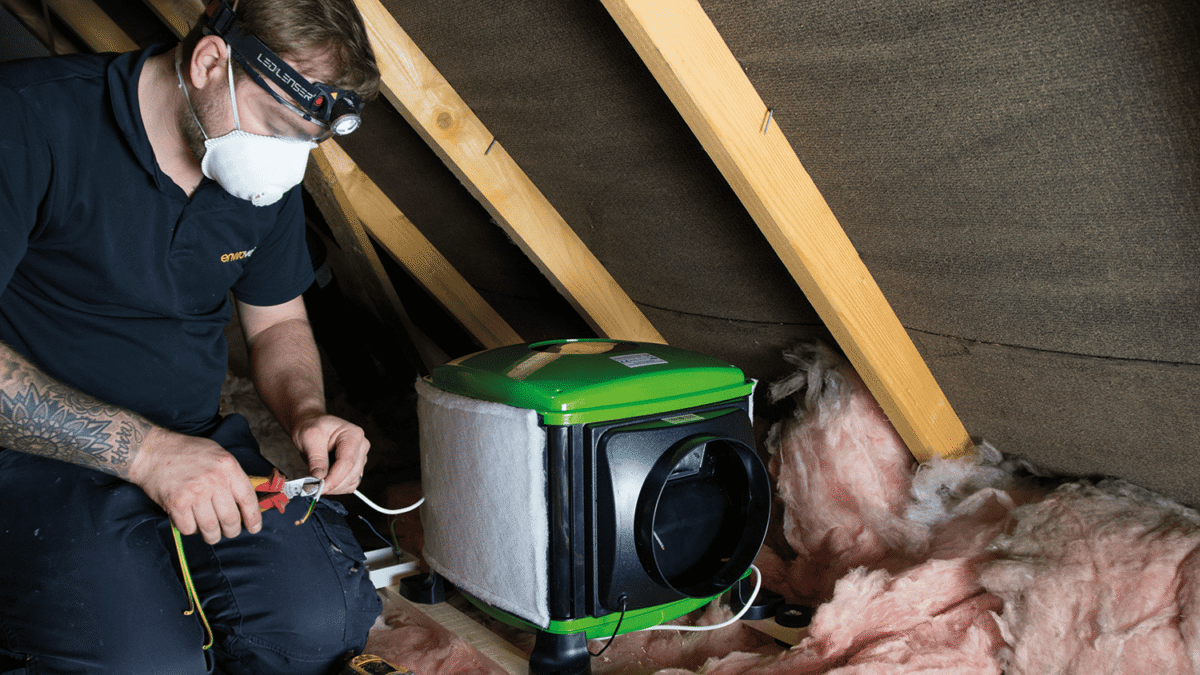
Typically installed in the loft, PIV systems introduce filtered, fresh air throughout the home, diluting pollutants and displacing moisture-laden air.
This can reduce condensation and help prevent mould from gaining a foothold where excess indoor moisture is the underlying cause – creating healthier, safer living environments.
4. Mechanical Ventilation with Heat Recovery (MVHR)
For new builds and some retrofit projects, Mechanical Ventilation with Heat Recovery (MVHR) is an excellent solution to improve indoor air quality, recover lost heat and support a whole-house ventilation system.
MVHR systems can recover 73% to 95% of the heat from exhaust air, depending on the system and operating conditions, improving energy efficiency and contributing to SAP ratings.
They can play an important role in energy-efficient home design and provide residents with an effective way to combat condensation and mould.
5. Remote Environmental Data Logging
With new regulatory requirements and the introduction of Awaab’s Law, there is a growing need for remote environmental data logging.
These systems provide real-time data on relative humidity and temperature, allowing landlords to monitor conditions across housing stock.
Linked with other building performance data, this helps to:
- Proactively identify potential issues
- Support disrepair case management
- Encourage resident behavioural changes
- Improve transparency and reporting
6. Design Support for Social Housing Providers
One size doesn’t fit all when it comes to ventilation systems.
Specialist ventilation design services provide detailed technical drawings and support compliance with SAP assessments, Passivhaus methodology, and the latest Building Regulations.
This ensures landlords and contractors are compliant and achieve the most appropriate, efficient system for each specific property type.
7. Choosing the Right Partner in Ventilation
The landscape for social landlords is changing rapidly – with tighter regulations, increased legal scrutiny, and higher resident expectations.
But with the right strategy and partner, housing providers can turn this challenge into an opportunity to:
- Improve property performance
- Reduce complaints
- Enhance resident safety and engagement
With thanks to James Kane, Head of Social Housing Sales at EnviroVent, an awarded supplier on the PfH Responsive Repairs and Void Works DPS. To view this and other relevant solutions please see the links below.

About James Kane
James Kane is a ventilation and indoor air quality specialist with nearly 20 years of experience working with social landlords across the UK, helping housing providers tackle some of the sector’s most pressing challenges around condensation, mould, and resident health.
Currently Head of Sales for Social Housing at EnviroVent, the UK’s leading manufacturer of low energy domestic ventilation solutions, James leads a national team of ventilation specialists who work directly with social landlords to improve indoor air quality, support planned and major works programmes, and drive down responsive repair costs. His focus is on providing practical, outcomes-led solutions ,from specification advice for kitchen and bathroom upgrades through to survey-based diagnosis of persistent damp and mould issues, all with a shared goal of improving the quality and safety of residents’ homes.
Before EnviroVent, James spent over five years at Vent-Axia, where he served as Social Housing Director and later as Airtech and Vent-Axia Sales Director. Prior to that, he spent eight years at Kohler Mira, where he helped establish the company’s social housing division, providing thermostatic electric and mixer shower solutions to the sector.
With deep expertise in ventilation specification, condensation and mould remediation, and the operational pressures facing social landlords, James brings a genuinely collaborative, solutions-first approach to every client relationship and a clear commitment to creating healthier home environments for residents.